Grammar Blog
English Grammar Tips: Practical Tips for Clear and Confident Communication
Grammar doesn’t have to be about memorizing endless rules! This blog focuses on practical, real-world tips on English grammar that enhance clarity and confidence in communication. Whether you’re writing emails, delivering presentations, or having conversations, our straightforward explanations and examples will help you use grammar effectively—so it works for you, not against you.
Categories
Recent Posts
-
Common Tense Mistakes Non-Native English Speakers Make in Business Meetings
It’s common for professionals to make subtle but noticeable tense mistakes in business communication. However, by understanding and correcting these common errors, you can improve the clarity and confidence of your message. 1. The Present Tense Puzzle This is a very common mistake for non-native speakers, who often use the Present Simple for actions happening…
-
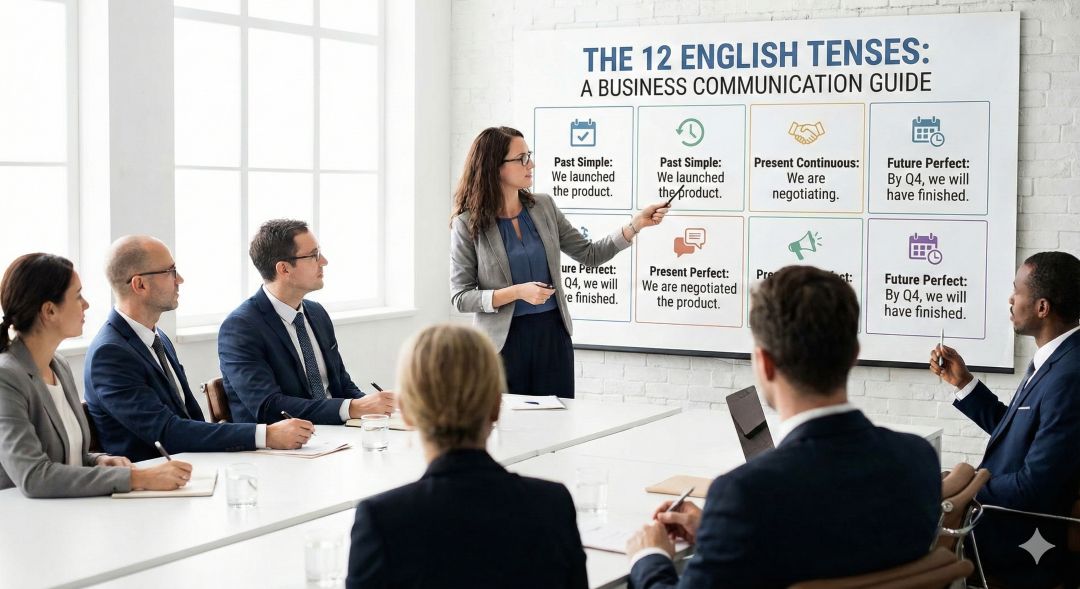
The 12 English Tenses: A Business Communication Guide
Mastering the 12 English tenses is a crucial step for professionals who want to communicate clearly and confidently. While many people learn the tenses in school, understanding how to apply them in specific work situations is a different challenge. By using the correct tense, you can precisely describe past achievements, current responsibilities, and future plans.…
-
The Future Perfect Continuous Tense: A Complete Guide
Understanding the Future Perfect Continuous Tense The Future Perfect Continuous tense is used to describe actions that will have been happening for a period of time before a certain point in the future. It emphasizes the duration of an action that will be in progress until a specific future time. Form of the Future Perfect…
-
The Future Perfect Tense
Understanding the Future Perfect Tense The Future Perfect tense is used to describe actions that will be completed before a specific point in the future. It focuses on the completion of an action at a certain time in the future. Form of the Future Perfect: Subject Positive Form Negative Form Question Form I/You/We/They will have…
-
The Future Continuous Tense
Understanding the Future Continuous Tense The Future Continuous tense is used to describe actions that will be happening at a specific moment in the future. It emphasizes the ongoing nature of an action that will occur at a future point in time. Form of the Future Continuous: Subject Positive Form Negative Form Question Form I/You/We/They…
-
The Future Simple Tense
Understanding the Future Simple Tense The Future Simple tense is used to describe actions that will happen in the future. It’s often used for predictions, promises, offers, and decisions made at the moment of speaking. Form of the Future Simple: Subject Positive Form Negative Form Question Form I/You/We/They will work, play, eat will not (won’t)…
-
The Past Perfect Continuous Tense
The Past Perfect Continuous tense is used to show that an action was happening continuously before another action or point in the past. It emphasizes the duration of an action that was in progress up until a certain time in the past. Form of the Past Perfect Continuous: Subject Positive Form Negative Form Question Form…
-
The Past Perfect Tense
The Past Perfect tense is used to describe an action that was completed before another action or point in the past. It shows which of two past actions happened first. Form of the Past Perfect: Subject Positive Form Negative Form Question Form I/You/We/They had worked, played, eaten hadn’t worked, hadn’t played Had I/you/we/they worked? He/She/It…
-
The Past Continuous Tense
The Past Continuous tense is used to describe actions or situations that were ongoing or in progress at a specific time in the past. It emphasizes the duration or the interrupted nature of an activity. Form of the Past Continuous: Subject Positive Form Negative Form Question Form I/You/We/They was/were working, playing, eating wasn’t/weren’t working, playing,…
-
The Past Simple Tense
The Past Simple tense is used to describe actions that happened and were completed at a specific time in the past. It is often used for events that happened at a particular moment or in a sequence. Form of the Past Simple: Subject Positive Form Negative Form Question Form I/You/We/They worked, played, ate didn’t work,…